
Wait, teachers didn’t sprout out from the womb as adults? They didn’t just appear holding coffee and a lesson plan, frontal lobe fully formed and emotionally regulated? They…. had a life before teaching?
Believe it or not, this is hard for many San Domenico students to grasp. Students feel that there’s a disconnect between teachers and students. As it turns out teachers were once middle schoolers who were way too involved with knowing who kissed whom at the dance, high schoolers who made questionable choices, breaking into houses to throw parties, teens who were convinced being cool and popular mattered more than being smart, teachers, who made mistakes in the past, who live to teach and tell their stories.
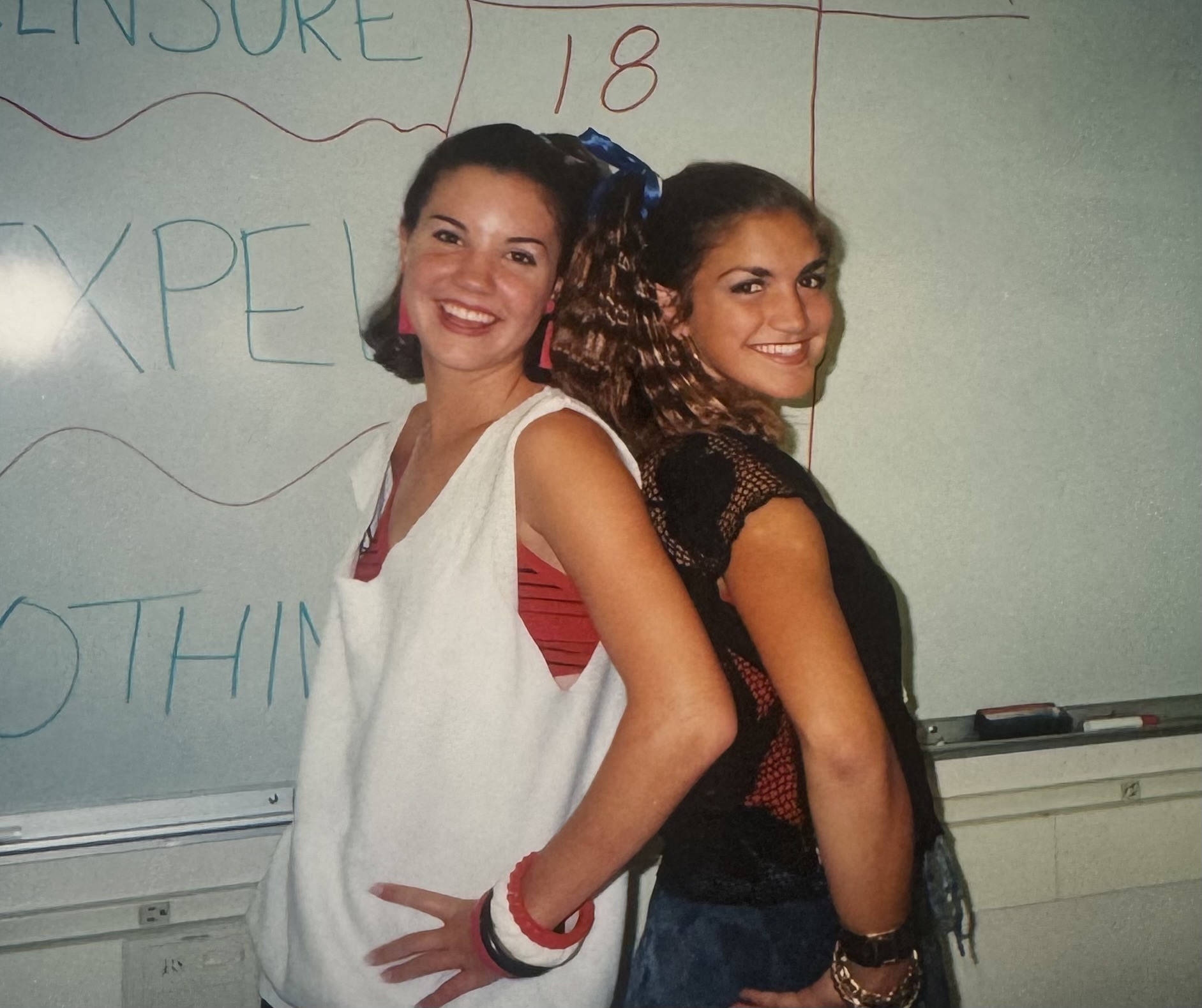
Upper school English teacher, Gina Jaeger, described herself as a “good student, but a little sassy.”
She was an honors and AP kid who didn’t necessarily love school, yet she knew how to succeed in it.
“I didn’t understand why certain rules mattered,”Jaeger said, recalling frequent disputes over dress code policies.
Her one and only detention she got through high school came from wearing a top that didn’t violate the written rules, though her administrators disagreed.
Jaeger was very involved. She played sports year round, was involved in student government and went to dances. Thus, she was grateful to experience high school before social media existed.
In high school, Jaeger had a meticulous life plan: move to New York City, become an FBI agent and drive a red jeep.
Newsflash… None of that happened.
Instead, Jaeger ended up at UCLA, which was an achievement she felt was at the time enormous, but now feels it’s insignificant.
“Zero people care where I went to college,” she said. “What mattered was that I was happy.”
That perspective, that what feels monumental at 17 rarely defines your forever, is evident across interviews.
“I never felt left out because I didn’t know what I was missing,” Jaeger said. “Now students can see everything they’re not included in.”
For Dean of Students, Stacy Cohen, adolescence wasn’t a straight yellow brick road. It was a thorny, zig zagged, less linear journey.
Cohen described her motivation for her academics through middle school, all to prepare for the route to an independent high school, yet she was falsely told she didn’t get into the school of her dreams. Cohen was crushed, and so was her motivation through the beginning of high school. Academics took a back seat.
“If I’m not smart,” Cohen thought, “I’m just going to be cool.”
That mindset showed up in her grade reports, with low C’s and the occasional D’s, with decisions she wishes she could revisit.
Looking back, Cohen is happy how life turned out, yet she’s honest about the impact those early choices had on her opportunities.
Then came a turning point. Cohen took a very hard class, which she was warned about. It was a classroom where desks were in a circle and no traditional grading. It was a class built on open discussion and curiosity.
“It lit a fire in me that I hadn’t felt since eighth grade,” Cohen says.
That fire is still visible today. As a leader, Cohen doesn’t want to be scary. She wants students to push back, to speak up, and to care deeply. She believes school should be a place where students learn how to effectively navigate uncomfortable conversations, repair relationships, and advocate for themselves.
“Growth isn’t smooth; it’s human,” Cohen said.
Computer science teacher Luca Djurovic’s teenage years carry a different tone, but the same honesty. His memories are filled with cringey moments—things he said to impress girls that honestly did not land.
“To this day,” he laughs, “I’ll be in the shower like, why did I do that?”
Djurovic also experiences classic teenage schemes. He enjoyed coming up with sneaky plans. Djurovic was the secret mastermind behind pranks. Djurovic has a story that feels like a cannon event for many teens: going to Taco Bell with his friends five minutes before closing and pooling together money to order an absurd amount of food (50 tacos and 50 burritos). Of course this didn’t make sense, but they could do it, so they did.
Yet, Djurovic’s reflection is grounded and reassuring. He explains that everything feels monumental when you’re young. For example, he explained how one bad test score or bad decision feels permanent when you are in high school.
“It’s all recoverable,” Djurovic says.
Life keeps going. You can reset. His advice is simple and comforting. Don’t sweat the small stuff. Believe in yourself and what you’re doing.
“Fake it till you make it,” Djurovic said.
When listening to these intriguing stories, it is evident that teachers at San Domenico aren’t exceptions to experiencing adolescence.
They were once mischievous students who made mistakes, fell behind, and are deeply human. And now, they teach us not as people who understand and get everything, rather they are people who have learned.