



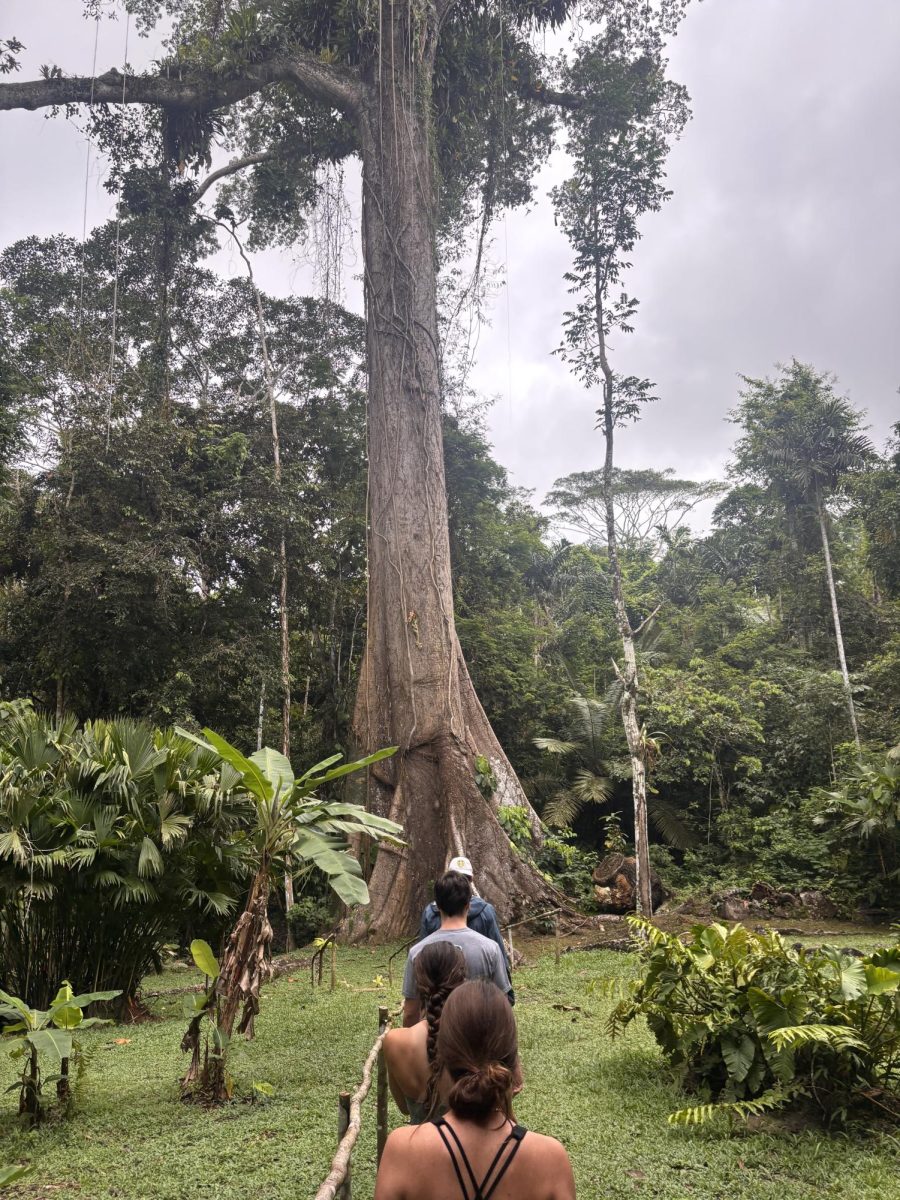
What would you do if you were stuck in the middle of the Peruvian Amazon with no power, no drinkable running water, all the while throwing up the contents of your dinner at 1:00A.M. in your teacher’s toilet?
That was me. On the second night of our trip, I was shivering in a cold sweat, unable to hold down food or water. I somewhat believed I was going to die right there and then, killed off by a rare Peruvian disease that I’d recently learned about from a Netflix documentary. Unfortunately, that wasn’t the last time during the week-long excursion where I believed I wouldn’t make it home.
I can be dramatic, and clearly I was — since now I’m home and well — but I stand by the fact that the pain I experienced from whatever plagued my body was one of the most painful sicknesses I have ever endured.
And I get sick a lot.
That sickness made me crumble to the floor of the Lima airport, silently crying in line for customs, my abdomen clenching in on itself inside my barren stomach. My stomach acid came up time and time again, as my vision spotted and my muscles ached so severely it hurt to move my legs.
In hindsight, I should have advocated for myself more than I did. But as long as the teachers gave me TUMS and told me it was from the malaria meds, I was able to delude myself with the belief that the pain would soon resolve itself.
This is in no way a jab at the chaperones on my trip. They were patient, accommodating and helpful, always willing to do what they could in the middle of the isolated jungle to help me. When I was hunched over a toilet, eating dry saltines for breakfast and sleeping extra hours of the day, the teachers were there, telling me I would be alright.
Despite the weakened state of my body, what my eyes saw in the heart of the Amazon jungle will forever shine brighter than the consequential pain.
Our group was fortunate enough to see fuzzy baby sloths, playful monkeys, and engorged snakes, stuffed from their dinner. And that’s just a handful of the wildlife we were lucky enough to encounter.
As an animal lover, it was an experience like no other. The sounds of the nocturnal jungle would ring in my ears: screeches from birds, clicking from bugs, followed by random rustles of leaves hundreds of meters above us in the pitch darkness. The ants scurried all over my shoes and socks — eager to get back to the hive, with tarantula holes and spiders dotting the paths and occasional leaves.
It was spectacular. I loved the smell of the rain, as cool daily showers relieved us from the thick blistering heat, washing away the dirt and sweat from our tanned bodies. The rainbows spanned across the vast jungle, turning each dew drop into a glowing orb of sun, dancing off the leaves.
It all felt ethereal.
We watched pink dolphins leap from the waters, their smooth salmon colored skin glistening magnificently in the calm ripples of the 30 mile wide river.
I’ll never forget the bright orange of the piranhas we caught. Their small, yet mighty teeth that can crush bones, flailing around on our makeshift fishing rods.
The girls boat (my boat) caught about 11 fish in total: piranhas, catfish and vegetarian piranhas, a species that none of us tourists even knew existed.
We bragged to the boys back at the base of our great success on the river, as we ate the fish for dinner, fried by our hospitable jungle hosts (I was sick and therefore did not partake, but I was informed that piranha is delicious).
It truly was a transformative experience, and I can’t stress how grateful I am to say I saw these spectacular species with my own eyes. The Amazon, embodying a true ecosystem, is a place of survival, growth, and constant evolution.
It wasn’t just the wildlife that was wonderful to see, but the people we interacted with too. Not many of the Peruvians we met spoke English, so our Spanish was truly put to the test.
By the end of the trip I was saying “gracias” and “por favor” on instinct, and attempting to speak fully in Spanish, which earned me a few puzzled looks from the people working at LAX airport.
The tribal and village people we met all smiled warmly at us. They asked us about our favorite colors, food and shows — or at least that’s the extent to which we could understand.
We laughed in unison at our horrible Spanish, but not once did people insult or condemn us for our language skills. They simply smiled, hints of confusion lining their face.
We painted their school with light blue paint, a pretty color that added personality and gave us a bonding experience with the students who attended. By the end of the 3 hour process, we were all covered in specks of dried blue paint and sweat, desperate for a cool rain shower. We enjoyed our break in the shade, eating a traditional rice and chicken meal boiled for an hour in a banana leaf.
We played soccer against their local team, bonding over the international language of sports. Smiles and laughs erupted throughout the whole game, and when we slid away from the village in our green and white motor boats, a group of people came down to the waters edge to wish us farewell.
If there’s one thing I learned from my trip, it’s that nature is beautiful and unpredictable; one day you’re sick and the next you’re walking through the vast canopy of the jungle. In the Amazon, it felt as though nature was bigger than us, cradling us in its massive arms. Whereas at home with all our loud cars and shopping malls, we feel like we are bigger than nature.
I would recommend everyone to visit the Amazon, to take risks, to try new food, to meet new people, to practice Spanish, and to experience what it’s like to truly be in nature.