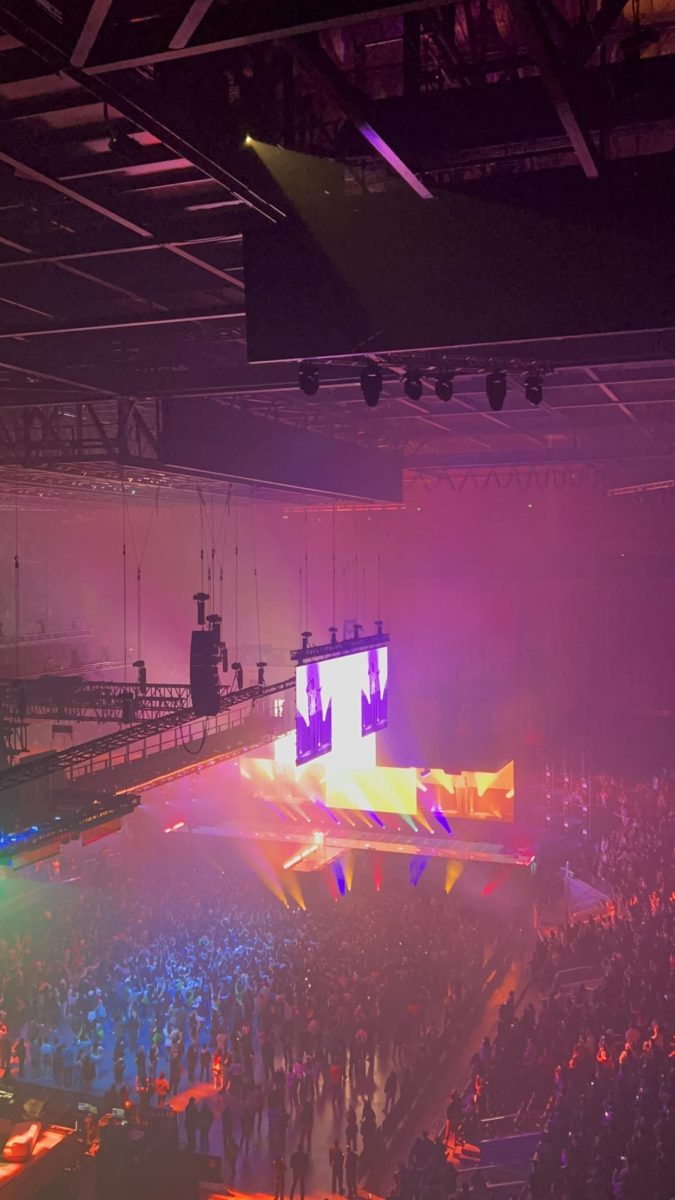





In the span of one week, Puerto Rican artist Bad Bunny (Benito Antonio Martínez Ocasio) went from taking home three awards at the Grammys, to performing at one of the most-watched performances on the planet. His rapid rise highlights not only his popularity, but also his influence on global music and culture.
Known for blending reggaeton, Latin trap, and pop, Bad Bunny has consistently broken streaming records and sold out stadiums worldwide. Bad Bunny’s most recent album, “Debí Tirar Más Fotos”, is considered a “love letter” to Puerto Rico, incorporating traditional styles like plena and bomba alongside modern urbano. The album’s emotional storytelling and cultural pride have resonated deeply with fans, especially within the Latino community.
Bad Bunny made history Sunday, Feb. 8 as the first artist to headline a halftime show with an entirely Spanish-language performance. This performance marked a major moment for representation, on one of the largest entertainment stages in the world. And, as promised, he made the halftime show a dance party.
The set was inspired by his hometown community in Puerto Rico, bringing elements of his own culture to the performance. Throughout the show, he portrayed a love story, beginning with a couple getting engaged, to the ceremony, where he brought out guest singer, Lady Gaga, to perform “Die With a Smile”. By recreating familiar scenes from his upbringing, he emphasized authenticity and connection.
Ultimately, Bad Bunny’s performance carried unity. His show ended with him carrying a football with the words “Together, We Are America.” He told the crowd, “God bless America,” before listing all of the countries in the Americas.
The selection of Bad Bunny to perform at the Super Bowl was overall quite divisive. Turning Point USA, which is a non-profit organization founded by Charlie Kirk, hosted the “All-American Halftime Show,” meant to be the conservative “alternate” halftime show. The group described the show as an “opportunity for all Americans to enjoy a halftime show with no agenda other than to celebrate faith, family, and freedom.” Turning Point USA’s halftime show had about 6.1 million viewers while Bad Bunny’s had well over 100 million.
Despite the controversy, the overwhelming viewership of Bad Bunny’s halftime show emphasized the need for representation in the media and reminded all of us that we are one, something that I believe we all need to remember in times like this.