



This year, for San Domenico’s Spring Discovery week, I went to the American South: five days, four states and way too many “babies” to keep track of.
Starting off, we arrived in New Orleans, where the beignets were sweet, yet overwhelmingly messy and the air clung to our skin, making us sweat the moment we stepped outside. We explored the French Quarter and went to a jazz club called Preservation Hall, sitting in awe as Clint Maedgen and Branden Lewis played Diana Krall’s “Gee, Baby, Ain’t I Good to You,” with jaw-dropping passion radiating from their trumpets.
But of course, it wouldn’t have been a trip to the South without Waffle House. When we got to Mississippi, we had it for breakfast—a classic Southern start to our day. “Anything else besides an omelet, baby?” the waitress asked. I paused, not used to being called “baby” by someone I didn’t know, especially since I’m 17 and definitely not much of a child.
In the South, terms like “baby,” “honey,” and “sweetheart” are part of everyday conversation, used to create a sense of warmth and familiarity, even between strangers. According to Ravishly, “baby” originally referred to an infant (obviously), but by the late 1800s–early 1900s it started being used between partners and family to show affection. Over time, that kind of language became more common in everyday interactions.
It’s funny how a word once used between lovers and family has become something you can just say to a stranger.
According to Britannica, the way people use words like “baby,” “honey,” and “child” also stems from Black Southern culture. During slavery and later segregation, language became a way for Black communities to create connection and care in the face of dehumanization. Those expressions carried on and spread more widely across the South through daily conversation and music, especially blues and jazz, where artists like B.B. King and Muddy Waters used “baby” constantly in songs, expressing feelings about love and relationships.
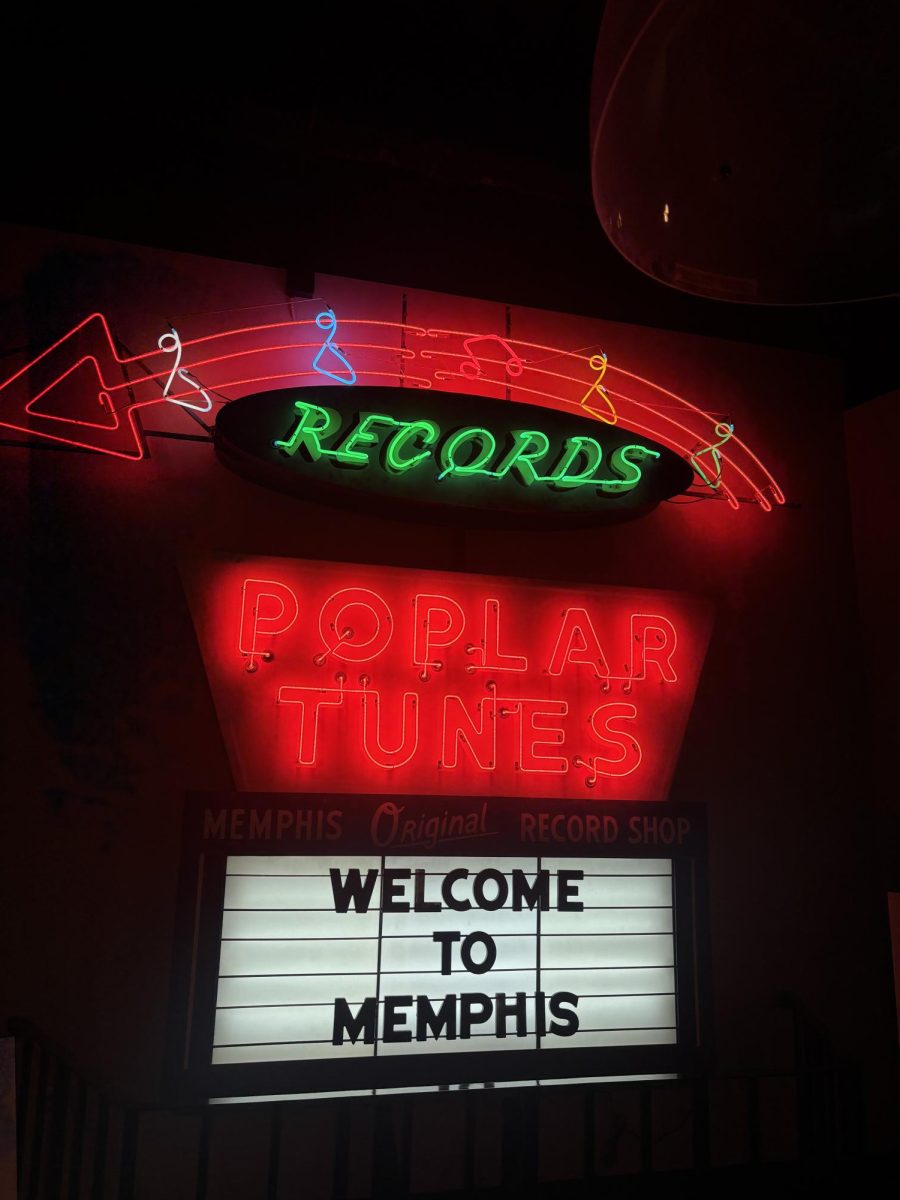
Upon arrival in Memphis, we went to Beale Street, known as the “Home of the Blues.” We spent the evening at a blues club where we ate delicious fried pickles and danced our hearts out. Southern music really does hit the spot, especially when the word “baby” is bouncing around the room, repeated in almost every song. After hearing the word so much, “baby” started to sound like a filler word at the end of sentences.
To conclude our trip, we went to the Rock & Soul Museum, where we were introduced to Elvis Presley. I’m convinced his constant use of the word “baby” came from some lost bet. Walking through the museum, it felt like every sentence he sang ended with it. Like anyone else, I love Elvis, but I couldn’t help but laugh at his obsession.
But don’t worry, Elvis wasn’t the only one. Muddy Waters and Otis Redding, two of the biggest names in blues, used it just as much. And let’s not forget B.B. King, whose name literally sounds like the word “baby.”
By the end of the trip, “baby” didn’t feel weird anymore. I started to enjoy it when waitresses called us Californians “baby,” even though it was obvious we weren’t from the South. A term that caught me off guard at first, started to become familiar. It’s a real form of hospitality, making the South feel very homey.
Even while boarding the plane to return to San Francisco, I jokingly thought “here you go, baby,” when handing the flight attendant my boarding pass.